

Mussels reveal growing pollution in Greece's "pristine" seas
Kathimerini report that Greek scientists have identified overtourism and increased maritime activity in the Mediterranean as contributing to elevated pollution levels in Greece’s coastal waters.
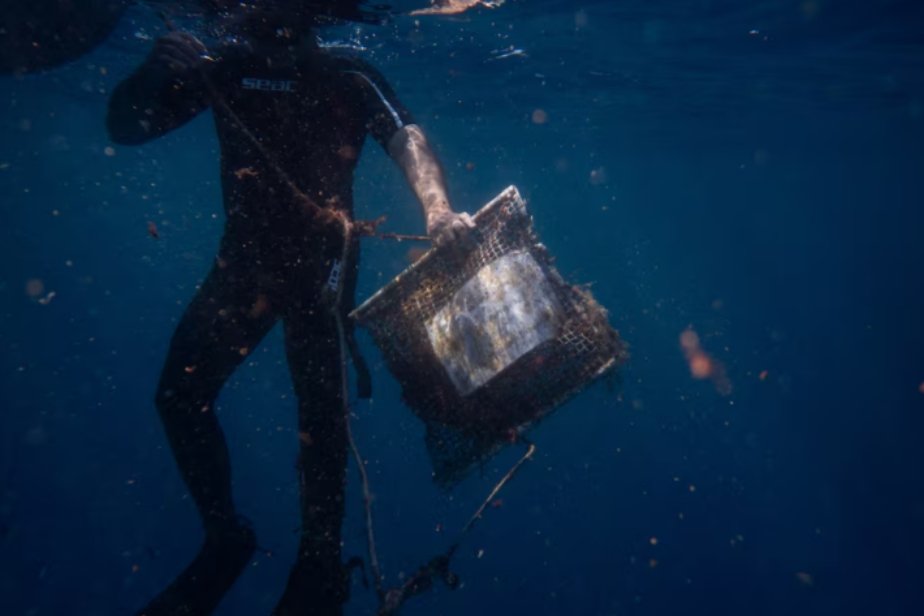
To monitor microplastic contamination, researchers have deployed thousands of mussels on the seafloor. Mussels, as filter feeders, absorb various contaminants—including microplastics—making them widely recognized as indicators of marine pollution.
At the Hellenic Centre for Marine Research (HCMR), teams have implemented this approach in Greece, a nation well known for its clear beaches and seas which attract millions of visitors annually. In May, cages containing mussels were submerged at different depths and locations, ranging from major ports to isolated islands. The specimens were retrieved in September for analysis of accumulated particles. Surface water testing was conducted using a floating net apparatus.
Oceanographer Argyro Adamopoulou of the HCMR laboratory noted the surprising amount of microplastics collected over short distances using these methods. According to the researchers, the Mediterranean Sea—a semi-enclosed basin—has become a significant area of concern for microplastic pollution.
The microplastic particles found in Greek waters varied in form, including fragments, films, microfibers, and pellets, with most being blue or transparent. HCMR biologist Nikoletta Digka stated that these were primarily derived from single-use plastics such as rubbish bags and water bottles. Over time, waves, currents, and sunlight further degrade these materials, making them increasingly difficult to detect.
While current concentrations do not yet pose a direct threat to human health, Digka highlighted that microplastics have been identified in every species analyzed by the team to date. On average, one or two microplastic particles are detected per population sample. Digka cautioned that without intervention, ongoing fragmentation will likely increase the ingestion of microplastics by marine organisms, thereby elevating potential risks to humans.
0 Comments